Top Sites
Top Blogs
Friendly Blogs
Catholic Blogs
Church
Art & Design
Europeans
India & Orient
|
October 5, 2008
Africa’s oldest navy parades its newest frigates

Fleet reviews are not very common occurrences. According to legend, the first fleet review took place when King Henry VIII on a whim gave the order to assemble his navy’s ships as he wanted “to see the fleet together”. On that occasion, the omnivorous monarch was rowed from vessel to vessel and enjoyed a repast on each. The tradition of the monarch reviewing the fleet continued, and usually took place to commemorate the coronation, to welcome a visiting monarch, or to commemorate some other event or occasion of great import.
Since the time of George III, British fleet reviews have typically taken place at Spithead between Portsmouth and the Isle of Wight. The 1814 review celebrating the Treaty of Paris was the last to be composed of only sailing ships, and included fifteen ships of the line and thirty-one frigates: “the tremendous naval armaments which has swept from the ocean the fleets of France and Spain and secured to Britain the domain of the sea”. The 1937 Coronation Fleet Review was made famous by the BBC radio commentary given by Lieutenant-Commander Thomas Woodrooffe. The retired naval officer had met up with a number of chums from his more sea-worthy days in a pub before the broadcast. Woodrooffe’s commentary was so incoherent that he was taken off the air within a couple of minutes; as the fleet was specially illuminated in the evening, Lt.-Cdr. Woodrooffe continually repeated “the Fleet’s lit up”; “lit up” also being a euphemism at the time for being drunk.

As he reviewed the fleet, little did the (recently-resigned) Mr. Thabo Mbeki know that he had less than three more weeks as State President.
Over the past three years, the South African Navy has commissioned four state-of-the-art Valour-class frigates and three Type 209 submarines, and to celebrate their entering into official service it was decided to have a Presidential Fleet Review.

The Presidential Fleet Review took place in Simon’s Bay north of Simon’s Town (Simonstad), the home base of the South African Navy.

The Valour-class frigates are part of the MEKO family of warships developed by the German shipbuilding firm Blohm + Voss. MEKO is short for Mehrzweck-Kombination or “multi-purpose combination”, a shipbuilding concept based on modularity which aims at reducing costs and increasing long-term adaptability. The Valour-class frigates are classed by Blohm + Voss as MEKO A-200SAN, and make extensive use of “X-form” stealth structural design in which right angles and vertical surfaces are avoided. The ships have a radar signature of vessels half their size as well as 75% less infrared signature (in part due to their exhaust exiting below the waterline).
The last fleet review in South Africa was held in 1997, when President Mandela reviewed the fleet in commemoration of the 75th anniversary of the South African Navy.
The frigates — two of which were built in Kiel, the other two in Hamburg — have a top speed of 27 knots and a range of 8,000 nautical miles (at 16 knots), with an endurance away from port of 28 days. Their air capabilities include a flight deck that can handle 2 Westland Super Lynx helicopters, or 1 Super Lynx plus 2 unmanned aerial vehicles (typically used in reconnaissance), or 1 Atlas Oryx utility helicopter (for search & rescue, or transporting up to 20 troops), or 1 Rooivalk attack helicopter. The Oryx and the Rooivalk are products of South Africa’s domestic defense industry, developed by necessity when the United Nations imposed an arms embargo on the country from 1977 to 1994, during which only Israel cooperated with South Africa in military research, exchange, and trade. The surface-to-air missile systems on the vessel were also developed domestically. (The surface-to-surface missiles, meanwhile, are the French-designed Exocets made famous during the Falklands War).

President Mbeki arrived in Simon’s Town by helicopter, and proceeded to board the SAS Protea from which the Commander-in-Chief reviewed the fleet.

As the lead ship approached the Protea, a contingent of three helicopters from the South African Air Force took part. A Rooivalk led the way carrying the national flag, followed by an Oryx (adapted for Arctic rescue) carrying the Defense Force flag, with a second Oryx carrying the South African naval ensign. While most navies that trace their lineage to the Royal Navy bear the red Cross of St George, the South African Navy have borne a green cross instead since 1952 because the Afrikaner-dominated government of the time lacked an appreciation for those of the country’s traditions that were of English origin. Perhaps this green cross should be called the Cross of St. Nicholas, given the Hollandic peoples’ affection for that holy saint.

Three of the four frigates are named after battles from South African history, but the lead ship in the review, SAS Mendi (above), is named after the 1917 Mendi incident, in which a troopship full of black South African labourers sank, leaving 616 South African and 30 British crew dead. The black men were members of the 5th Battalion South African Native Labour Corps recruited to work in support of the Allied forces in France during the First World War.
En route from the shipbuilders in Germany to Simon’s Town in South Africa, the SAS Mendi (Captain: Jimmy Schutte) met with HMS Nottingham at the site of the SS Mendi’s sinking and laid wreaths in commemoration of the dead.

Next was the SAS Amatola (Captain: Guy Jamieson), named after the series of battles between the Xhosa tribe and Great Britain that took place in the Amatola mountain range along the Eastern Cape. In 2007, Amatola became the first South African frigate to participate in Basic Operational Sea Training (BOST) with the Royal Navy since South Africa became a republic in 1961.

Following Amatola was the SAS Spioenkop, seen above with its dour-faced Captain C.G. Manig. Spioenkop takes its name from the Battle of Spion Kop (as it is usually rendered in English; the ship’s name is in Afrikaans), the great Boer victory over the British. Winston Churchill covered the Battle of Spion Kop as a war correspondent, and Mohandas Gandhi was a stretcher-bearer.

The final frigate in the review was the SAS Isandlwana (not pictured), named after the famous victory of the Zulus in the Anglo-Zulu wars. Isandlwana’s first commander, Capt. Karl Wiesner, recently handed the vessel over to Capt. B.K. “Bravo” Mhlana, the first black South African to command a frigate. Capt. Mhlana received part of his officer training from the Royal Navy.
After Isandlwana came the offshore patrol vessels SAS Galeshewe and SAS Isaac Dyobha, followed by two minehunters, SAS Umzimkulu and SAS Umkomaas, and an inshore patrol vessel, SAS Tobie. Then came two of South Africa’s three Type 209 submarines, SAS Charlotte Maxeke and SAS Queen Mojdajdi I. The fleet replenishment ship SAS Drakensberg finished up the review.

After the Presidential Fleet Review, Mr. Mbeki awarded medals and promotions back on land in Simon’s Town (above) before heading back to Pretoria by helicopter (below).

The purchase of the four specially-built frigates included an option to buy a fifth and some politicians have even suggested building a sixth. But the purchase of four has sparked a controversy over whether South Africa really needed four brand new frigates when some of its more useful Israeli-built patrol vessels are nearing the end of their lifelines. The post-apartheid government has proved surprisingly willing, in a time of high unemployment and great economic uncertainty, to invest the country’s resources in maintaining a high-quality army, air force, and navy that acts as a force for stability and order in the continent and especially in southern Africa. Whatever woes betide the land, we can rest assured that a well-equipped navy is guarding the southern seas.

October 2, 2008
The Netherlands’ premier broadsheet has gone partly English online

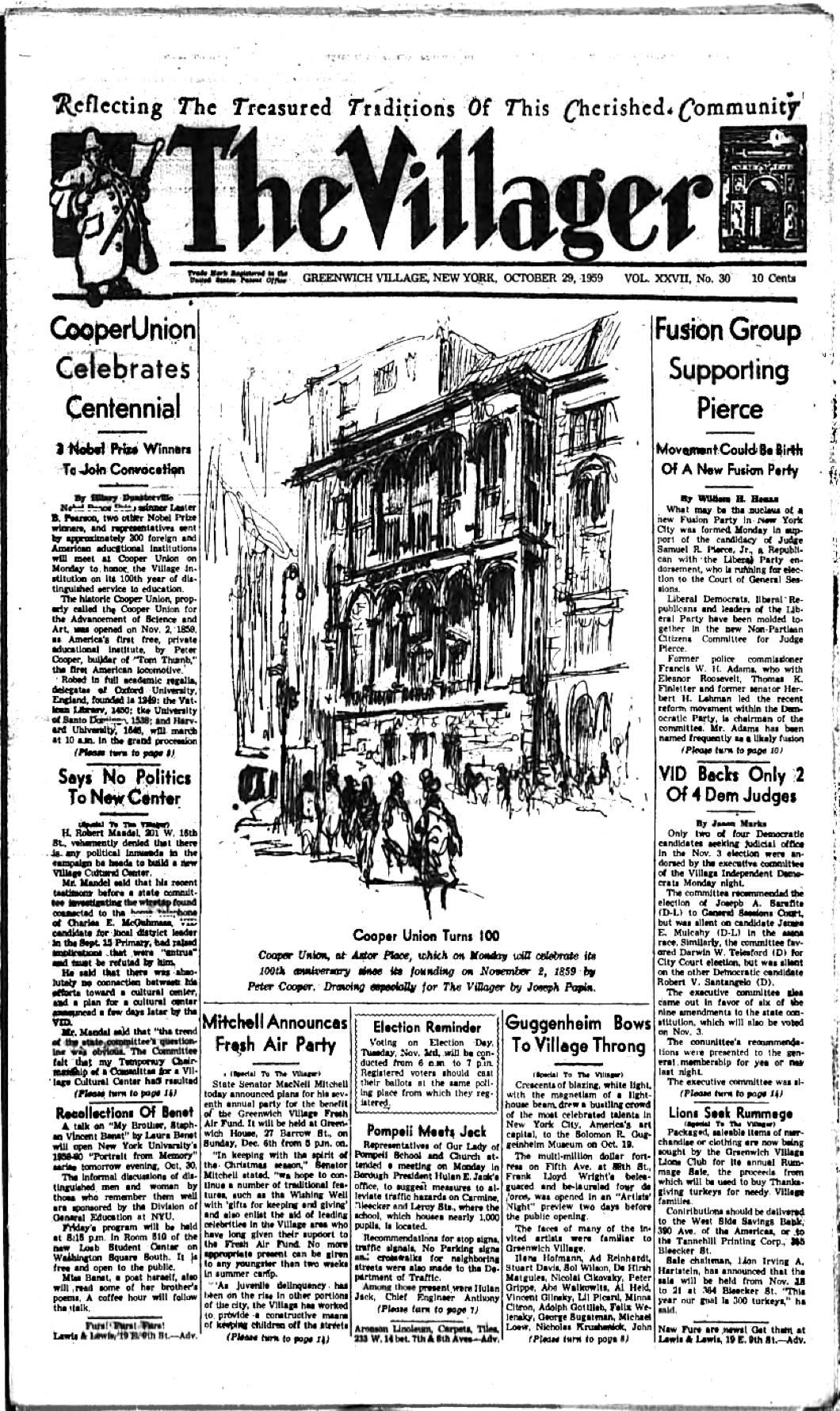
The moderate liberal Dutch broadsheet NRC Handelsblad is the latest of a series of European periodicals looking for a more international readership by translating part of their content into English for distribution on the world wide web. “NRC International” is partnered with the German weekly magazine Der Spiegel, itself a pioneer in featuring English content in an “international” section of its website. Aside from NRC and Der Spiegel, other news outlets now featuring web-only English-language content are Germany’s Die Welt and Hungary’s Heti Világgazdaság, while Eurozine features translated and original content from a broad spectrum of continental reviews and journals. Sadly, Sign and Sight recently had to reduce their “From the Feuilletons” — looking at the culture pages of German-language newspapers — from a daily to a weekly feature. Sign and Sight also features a weekly “Magazine Roundup” doing the rounds of a wide variety of European, Asian, and American magazines.
The move comes as print newspapers of the conventional variety across Europe and America are losing circulation. Some Manhattan newsstands have seen takers for the Sunday New York Times fall by as much as 80% in the past few years. The New York Times and Wall Street Journal both recently narrowed their page width in a move to save paper costs; the change, however, also means less room for advertising and a more ungainly appearance.
South Africa’s Herald, meanwhile, has bucked the gloomy trend and increased its readership by 14.5% in the past year. The Herald, the Eastern and Southern Cape’s regional broadsheet, attributes its success to a visual redesign and reorienting content to encourage readers to link up with the newspaper’s website. South Africa is also home to The Times (not to be confused with the older Cape Times), a new upmarket broadsheet newspaper launched as a daily extension of the century-old Sunday Times. The weekday Times was started a year ago and its circulation since just June has seen a 10.4% increase.
A major problem for the industry is that formerly high-end newspapers have driven down the quality of their product to a suicidal extent over the past decades. The middle market, for better or worse, is dead, and publishers have three alternatives to this disappearing sector: 1) go lowest-common-denominator — as The Times of London has done, with only moderate success; 2) go up-market — The Times and Sunday Times of South Africa have proved worthwile; or 3) go niche — the New York Observer is still in business after two decades of aiming towards Manhattan’s yuppie community.
Whichever path taken, integrating print and web operations is vital for the survival of print newspapers and other “dead tree” media. That European newspapers are providing at least part of their content in English is helpful in keeping up with events and ideas in countries like Germany, the Netherlands, and Hungary as our native English-language media are tightening their belts and cutting foreign correspondents and coverage. I hope more non-English papers follow this trend and help to permanentize it.
October 2, 2008
« They do not want to hear about the Grace of God? They will hear the grace of the cannon. »
Alfred I Candidus Ferdinand,
Prince of Windisch-Grätz
on the liberal constitutionalist rebels
October 2, 2008

Some good Christian soul was kind enough to put most of our friend David Lumsden’s funeral at St. Mary’s (Catholic) Cathedral in Edinburgh on YouTube. It was the first Latin requiem in the extraordinary form of the Mass held in the Cathedral for many decades — a fact which David would have particularly enjoyed. Of note is the address given by Robin Angus, embedded below, and of course Gerald Warner’s previously mentioned report should not be missed either.
Read the rest of this entry »
October 1, 2008

A splendid afternoon is the best way to describe it. Last Sunday beheld the annual hunter trials of the Montreal Hunt Club up in St-Augustin-de-Mirabel, Quebec. Readers will no doubt remember my previous post on the oldest hunt in the New World. The club treasurer Annette Laroche had suggested swinging by the Club sometime and as it happens my good friend Ezra Pierce recently married and moved to Montreal with his lovely new wife. So when Raymond Côté (seen in the previous post jumping on the beautiful white mare Frimousse) contacted me with an invitation to the hunter trials, I decided it would be foolish not to take the opportunity to visit the beautiful land of Quebec for the first time in many years.

Hunter trials are basically an equestrian competition to test the field hunter horses in a series of jumps, but, as Annette explained to us, it’s also simply an excuse for the club to get together, be social, and have a good time.

The most interesting competition we got to see that day was the jumping in pairs. The riders demonstrated a real skill, more easily appreciable to lay spectators such as ourselves than in the single rider jumps. It was interesting picking up on their little methods: the trois-deux-un leading up to the jump, spotting each other to ensure the correct positioning, and the playful whelp of joy after touching down again. And indeed the joy was infectious: while the skies were grey, the spirit on the ground was quite merry.
The prizegiving.

La belle Frimousse!


Important as riding is, the Club de chasse à courre de Montréal is, after all, a hunt club and the running of the hounds was a helpful reminder thereof.
The hounds respond to the huntsman’s horn calls.

Even though they were working, the hounds were having a ball.


After the demonstration with the hounds, Annette took us over to the stable to meet her horse Roby, currently recovering from a bit of leg trouble.


After meeting this fine, endearing horse we had to head back into Montreal. Nonetheless, I can say assuredly that a good time was had by all, largely thanks to the cheerful hospitality of our Québécois hosts. It is both fascinating and reassuring that this most English of traditions has been so comfortably (and heartily) adopted by these sons and daughters of France. The Montreal Hunt Club is plainly in good shape, and we wish it every continued success in the fields. Bonne saison de chasse!

Category: Hunting
September 29, 2008

Adjoined to the ancient Cathedral Basilica of Notre-Dame in Quebec City is the Petit Séminaire. The Séminaire de Québec was founded in 1663 by the Blessed François Laval to train priests for the Vicariate Apostolic of New France, and the Petit Séminaire, its secondary school, was founded just five years later to teach both colonial French and native Indian youths. Among the school’s former pupils are four prime ministers of Québec, two lieutenant-governors (as the Queen’s viceregal representative in the province is known), and many other writers, politicians, and important figures of history. The Petit Séminaire survives today as a private Catholic secondary school.
Read the rest of this entry »
September 25, 2008

I will be off in Quebec for a few days.
September 25, 2008
Posted in aid of a friend’s intention.
September 22, 2008
Joseph DeCamp, The Steward (Lewis of the Porcellian)
Oil on canvas, 54 in. x 40 in.
1919, the Porcellian Club
The Porcellian Club at Harvard University was founded in 1791 and McKean Gate, the entrance to Harvard Yard opposite the club’s quarters on Massachusetts Avenue in Cambridge, features a boar’s head in tribute. Digby Baltzell ranked the Porc (as it is colloquially known) as the most exclusive of Harvard’s “final clubs”, and Porcellian is known for having correctly turned its nose to Harvard seniors who later turned out to be no good: Joseph Kennedy was blackballed and Franklin D. Roosevelt described his failure to be elected to Porcellian as “the greatest disappointment of my life”.
Read the rest of this entry »
September 22, 2008
The State Opening of the States-General of the Netherlands

The third Tuesday in September beholds Prinsjedag — the Day of the Princes — when the Queen of the Netherlands formally opens the annual parliamentary session of the States-General. Queen Beatrix arrives at the Ridderzaal (Knight’s Hall) of the Binnehof palace in the center of The Hague by means of the Gouden Koets (Golden Coach) presented to her predecessor Wilhelmina by the grateful burgers of the city of Amsterdam.
Read the rest of this entry »
September 14, 2008
Benedict XVI brings a message of love & hope to the City of Light

It is wholly appropriate that the motto of the city of Paris is Fluctuat nec mergitur: “Tossed by waves, she does not sink”. It would be hard to find better words to describe the Barque of Peter, whose Holy Father the Pope has spent the past two days in the French capital. From time immemorial, France has been described as “the eldest daughter of the Church”, its primatial see of Lyons established in the second century and Clovis, its first Christian king, receiving baptism in 498. But alongside the 1,500 years of Christianity, France has, for the past two centuries, also been a font of revolution and disruption — the very spirit of that first “non serviam“.
It was the French thinker Charles Maurras — not himself a Catholic until the very end of his life — who conceived of the notion that that (since the Revolution) there was not one France but two: le pays réel and le pays legal; The real France, Catholic and true, versus the official France, irreligious and contrived. Just as Maurras differentiated the two visions of France, we in the English-speaking world know that England is truly a Catholic country that is suffering from a four-century interregnum (and so with Scotland, and Ireland, and America, and Canada, and Australia…). We love our homes but we know they are not truly themselves — they do not truly reflect that idea of their essence — until they enjoy the fullness of Christian communion.
Read the rest of this entry »
September 14, 2008
The Daily Telegraph — 6 September 2008
At 18 he left home to walk the length of Europe; at 25, as an SOE agent, he kidnapped the German commander of Crete; now at 93, Patrick Leigh Fermor, arguably the greatest living travel writer, is publishing the nearest he may come to an autobiography - and finally learning to type. William Dalrymple meets him at home in Greece
‘You’ve got to bellow a bit,’ Sir Patrick Leigh Fermor said, inclining his face in my direction, and cupping his ear. ‘He’s become an economist? Well, thank God for that. I thought you said he’d become a Communist.’
He took a swig of retsina and returned to his lemon chicken.
‘I’m deaf,’ he continued. ‘That’s the awful truth. That’s why I’m leaning towards you in this rather eerie fashion. I do have a hearing aid, but when I go swimming I always forget about it until I’m two strokes out, and then it starts singing at me. I get out and suck it, and with luck all is well. But both of them have gone now, and that’s one reason why I am off to London next week. Glasses, too. Running out of those very quickly. Occasionally, the one that is lost is found, but their numbers slowly diminish…’
He trailed off. ‘The amount that can go wrong at this age - you’ve no idea. This year I’ve acquired something called tunnel vision. Very odd, and sometimes quite interesting. When I look at someone I can see four eyes, one of them huge and stuck to the side of the mouth. Everyone starts looking a bit like a Picasso painting.’
He paused and considered for a moment, as if confronted by the condition for the first time. ‘And, to be honest, my memory is not in very good shape either. Anything like a date or a proper name just takes wing, and quite often never comes back. Winston Churchill - couldn’t remember his name last week.
‘Even swimming is a bit of a trial now,’ he continued, ‘thanks to this bloody clock thing they’ve put in me - what d’they call it? A pacemaker. It doesn’t mind the swimming. But it doesn’t like the steps on the way down. Terrific nuisance.’
We were sitting eating supper in the moonlight in the arcaded L-shaped cloister that forms the core of Leigh Fermor’s beautiful house in Mani in southern Greece. Since the death of his beloved wife Joan in 2003, Leigh Fermor, known to everyone as Leigh Fermor, has lived here alone in his own Elysium with only an ever-growing clowder of darting, mewing, paw-licking cats for company. He is cooked for and looked after by his housekeeper, Elpida, the daughter of the inn-keeper who was his original landlord when he came to Mani for the first time in 1962.
It is the most perfect writer’s house imaginable, designed and partially built by Leigh Fermor himself in an old olive grove overlooking a secluded Mediterranean bay. It is easy to see why, despite growing visibly frailer, he would never want to leave. Buttressed by the old retaining walls of the olive terraces, the whitewashed rooms are cool and airy and lined with books; old copies of the Times Literary Supplement and the New York Review of Books lie scattered around on tables between Attic vases, Indian sculptures and bottles of local ouzo.
A study filled with reference books and old photographs lies across a shady courtyard. There are cicadas grinding in the cypresses, and a wonderful view of the peaks of the Taygetus falling down to the blue waters of the Aegean, which are so clear it is said that in some places you can still see the wrecks of Ottoman galleys lying on the seabed far below.
There is a warm smell of wild rosemary and cypress resin in the air; and from below comes the crash of the sea on the pebbles of the foreshore. Yet there is something unmistakably melancholy in the air: a great traveller even partially immobilised is as sad a sight as an artist with failing vision or a composer grown hard of hearing.
I had driven down from Athens that morning, through slopes of olives charred and blackened by last year’s forest fires. I arrived at Kardamyli late in the evening. Although the area is now almost metropolitan in feel compared to what it was when Leigh Fermor moved here in the 1960s (at that time he had to move the honey-coloured Taygetus stone for his house to its site by mule as there was no road) it still feels wonderfully remote and almost untouched by the modern world.
When Leigh Fermor first arrived in Mani in 1962 he was known principally as a dashing commando. At the age of 25, as a young agent of Special Operations Executive (SOE), he had kidnapped the German commander in Crete, General Kreipe, and returned home to a Distinguished Service Order and movie version of his exploits, Ill Met by Moonlight (1957) with Dirk Bogarde playing him as a handsome black-shirted guerrilla.
It was in this house that Leigh Fermor made the startling transformation - unique in his generation - from war hero to literary genius. To meet, Leigh Fermor may still have the speech patterns and formal manners of a British officer of a previous generation; but on the page he is a soaring prose virtuoso with hardly a single living equal.
It was here in the isolation and beauty of Kardamyli that Leigh Fermor developed his sublime prose style, and here that he wrote most of the books that have made him widely regarded as the world’s greatest travel writer, as well as arguably our finest living prose-poet. While his densely literary and cadent prose style is beyond imitation, his books have become sacred texts for several generations of British writers of non-fiction, including Bruce Chatwin, Colin Thubron, Philip Marsden, Nicholas Crane and Rory Stewart, all of whom have been inspired by the persona he created of the bookish wanderer: the footloose scholar in the wilds, scrambling through remote mountains, a knapsack full of books on his shoulder.
Read the rest of this entry »
September 14, 2008
What is this cartographic madness? Hanover part of the Netherlands? Kassel ruled by France? Nuremburg part of a Bohemia that reaches to the Frankfurt suburbs? Hamburg in Denmark? Regensburg on the Austro-Czech border? I came across the company Kalimedia in an article from Die Zeit a month or two ago and discovered their map of a Europe without a Germany. Believe it or not, there were plans of one sort or another to achieve similar results at the end of the Second World War. The major plan for the dissection of Germany was merely a creation of Nazi propaganda, and while the vaguely similar Morgenthau Plan did exist, it was soon shelved once its impracticality became obvious.
The Bakker-Schut Plan, meanwhile, was a Dutch proposal for the annexation of several German towns, and perhaps even a number of German cities. German natives would be expelled, except for those who spoke the Low Franconian dialect, who would be forcibly dutchified. They even came up with a list of new Dutch names for German cities: c.f. the post at Strange Maps on “Eastland, Our Land: Dutch Dreams of Expansion at Germany’s Expense”.
September 14, 2008
This news photo showing a protest (what else?) of bus drivers on the Avenida de Mayo in Buenos Aires gives a good view of the capital’s city hall. The municipal headquarters is located between the Plaza de Mayo and the former home of the newspaper La Prensa; the Casa Rosada, Argentina’s presidential palace (officially called Government House, Casa del Gobierno) can be seen in the distance at the end of the square.
I’ve long thought they should reduce the auto space by two lanes, one on each side, and double the width of the sidewalks — but that would probably make the bus drivers even more irate.
September 11, 2008
Pieter Brueghel II, The Bad Shepherd
Oil on panel, 29 in. x 41¼ in.
c. 1616, Private collection
With an original estimate of £1,000,000–£1,500,000, Pieter Brueghel the Younger’s The Bad Shepherd sold at a final hammer price of £2,505,250 at Christie’s in London this July. As the house lot notes state, it is “one of the most original and visually arresting of all images within the Brueghelian corpus of paintings”.
The story of the good and bad shepherd is told in John (10:1-30), and is based on the notion of Christ as the embodiment of the good shepherd.
I am the good shepherd. The good shepherd lays down his life for the sheep. He who is a hireling and not a shepherd, whose own the sheep are not, sees the wolf coming and leaves the sheep and flees; and the wolf snatches them and scatters them. He flees because he is a hireling and cares nothing for the sheep.
It is significant that the distant horizon behind the sheep is broken only by a solitary church spire and a small farmstead. They seem to suggest that in abandoning his responsiblities the shepherd also rejects both the church and the community as he rushes headlong in the opposite direction. The mental anguish experienced by the shepherd is mirrored in a remarkable way by the barren landscape, shown from a dizzying bird’s eye perspective, stretching back into infinity. Interwoven only by vein-like tracks and ditches that lead the eye into the distance, the landscape is one of the artist’s most extraordinary achievements and very much a precursor to the psychological landscapes of the 20th century.
There is something arrestingly modern about this painting that fascinates me.
Read the rest of this entry »
|

Charles of Austria
pray for us!
About
More or less, the musings of a 24-year-old New Yorker, a graduate of the University of St Andrews in Scotland, currently resident in his native County of Westchester. [MORE ]
Search
Remembrances
St. Juan Diego
Recommended
Contact
andrewcusack@yahoo.com
I regret not being able to respond to all messages and
inquiries.
|